Real estate videography is the practice of producing video content to market residential and commercial properties for sale or lease. In 2026, video has become one of the most effective ways for agents to connect with buyers, showcase listings, and build a brand that stands out in a crowded market. Whether you are filming property walkthroughs on your smartphone or hiring a professional crew for aerial drone footage, understanding how real estate videography works, and how to do it well, can make a measurable difference in how quickly your listings attract attention and generate inquiries.
This guide covers everything you need to know: what real estate videography is, why the numbers support investing in it, what gear you need in 2026, how to plan and shoot your videos, which types of video content to create first, and how to avoid the most common mistakes. If you have been putting off video because it feels overwhelming, you are in the right place. Let’s walk through it step by step.
Find It Fast
Key takeaways
- Real estate videography includes property walkthroughs, aerial drone footage, virtual tours, and agent-branded content designed to market listings and build your personal brand.
- Buyers and sellers in 2026 overwhelmingly prefer agents who use video in their marketing, making it a practical necessity rather than a nice-to-have.
- You do not need a massive budget to get started. A smartphone, a tripod, and a basic editing app can produce solid results for most listings.
- Shooting strategy matters more than expensive gear. Planning your shots, staging the property, and paying attention to lighting will do more for your final product than any single piece of equipment.
- Distributing your videos across your website, video platforms, and social media channels multiplies their reach and keeps your brand visible between transactions.
What is real estate videography?
Real estate videography is the practice of producing video content, including property walkthroughs, aerial footage, and virtual tours, to market residential and commercial properties for sale or lease. It goes well beyond static photography by giving prospective buyers a sense of a home’s flow, scale, and atmosphere before they ever schedule a showing.
In 2026, there are generally two types of people creating this content: professional real estate videographers who specialize in property marketing, and agents who have built their own video production skills using consumer-grade cameras and editing apps. Both paths can produce strong results depending on the listing, the audience, and the budget.
The reason video matters so much comes down to how buyers experience properties online. A well-shot video lets someone walk through a home from their couch, understand the layout room by room, and get a feel for the neighborhood. That kind of immersion builds emotional connection in a way that a photo slideshow simply cannot match.
That emotional connection translates directly into business results. Video content generates higher engagement on listing pages, keeps potential buyers on your website longer, and gives you shareable assets for social media that extend the reach of every listing far beyond the MLS.
Real estate videography statistics in 2026
The data behind real estate video marketing has been building for years, and in 2026 the case is stronger than ever. Here are several statistics that show why agents who invest in video consistently outperform those who rely on photos alone.
- According to the National Association of Realtors’ 2024 Profile of Home Buyers and Sellers, 85% of buyers and sellers want to work with an agent who uses video as part of their marketing approach (NAR, 2024).
- According to Wyzowl’s 2025 State of Video Marketing report, 91% of businesses use video as a marketing tool, and 87% of marketers say video has directly helped them generate leads (Wyzowl, 2025).
- According to HubSpot’s 2024 State of Marketing report, video is the number-one content format for ROI, outperforming images, blog posts, and podcasts across industries including real estate (HubSpot, 2024).
These numbers tell a clear story: buyers expect video, sellers prefer agents who use it, and the format consistently delivers stronger engagement than other content types. If you are not producing video for your listings in 2026, you are leaving attention and leads on the table.
Real estate videography: Do it yourself or hire a pro?
The choice between DIY (do it yourself) video production and hiring a professional videographer depends on three things: your budget, the type of property you are marketing, and your comfort level behind a camera.
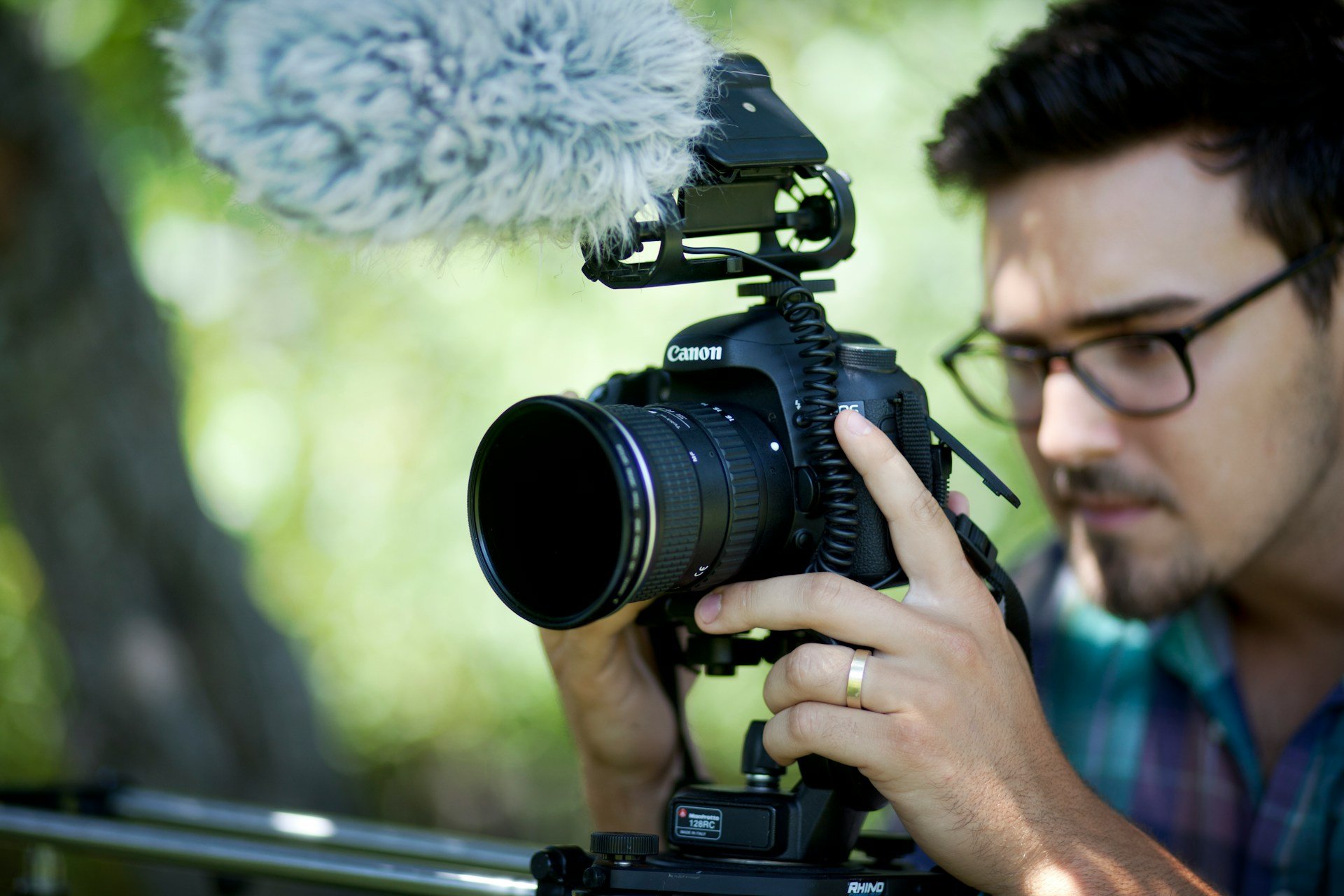
Choosing to do your own real estate videography can save money, and with the range of consumer-grade cameras and editing software available in 2026, it is more accessible than ever. This option works well if you are on a tight budget, enjoy the creative process, or want to add a personal touch that makes your content feel authentic. Many agents start with nothing more than a smartphone, a tripod, and a free editing app.
Hiring a professional videographer gives your content a polished, high-production look. Professionals bring the equipment, the eye for composition, and the editing experience to capture a property at its best. This option makes the most sense for higher-price-point listings or for agents who want to position their brand at the top of their market.
| Factor | DIY videography | Hiring a professional |
| Typical cost per video | $0–$200 (your time plus minimal gear) | $300–$3,000+ depending on scope |
| Best for | Standard listings, social media content, personal brand videos | High-value listings, brand launch videos, aerial footage |
| Turnaround time | Same day to a few days | 3–14 days including editing |
| Learning curve | Moderate (requires practice with framing, lighting, editing) | None for the agent (the videographer handles production) |
| Brand consistency | Depends on your skill and templates | High, especially with a recurring videographer relationship |
Many agents in 2026 use a hybrid approach: they shoot their own social media clips and neighborhood tours while hiring a professional for their highest-value listings. This keeps costs manageable while still delivering strong production quality where it matters most.
Real estate videography must-have gear
Gear recommendations last verified: January 2026.
As of 2026, the following eight tools represent the current standard for real estate video production. You do not need all of them on day one, but investing in at least the basics (a camera or smartphone, a tripod, and editing software) will put you in a strong position to start creating content that looks and sounds professional.
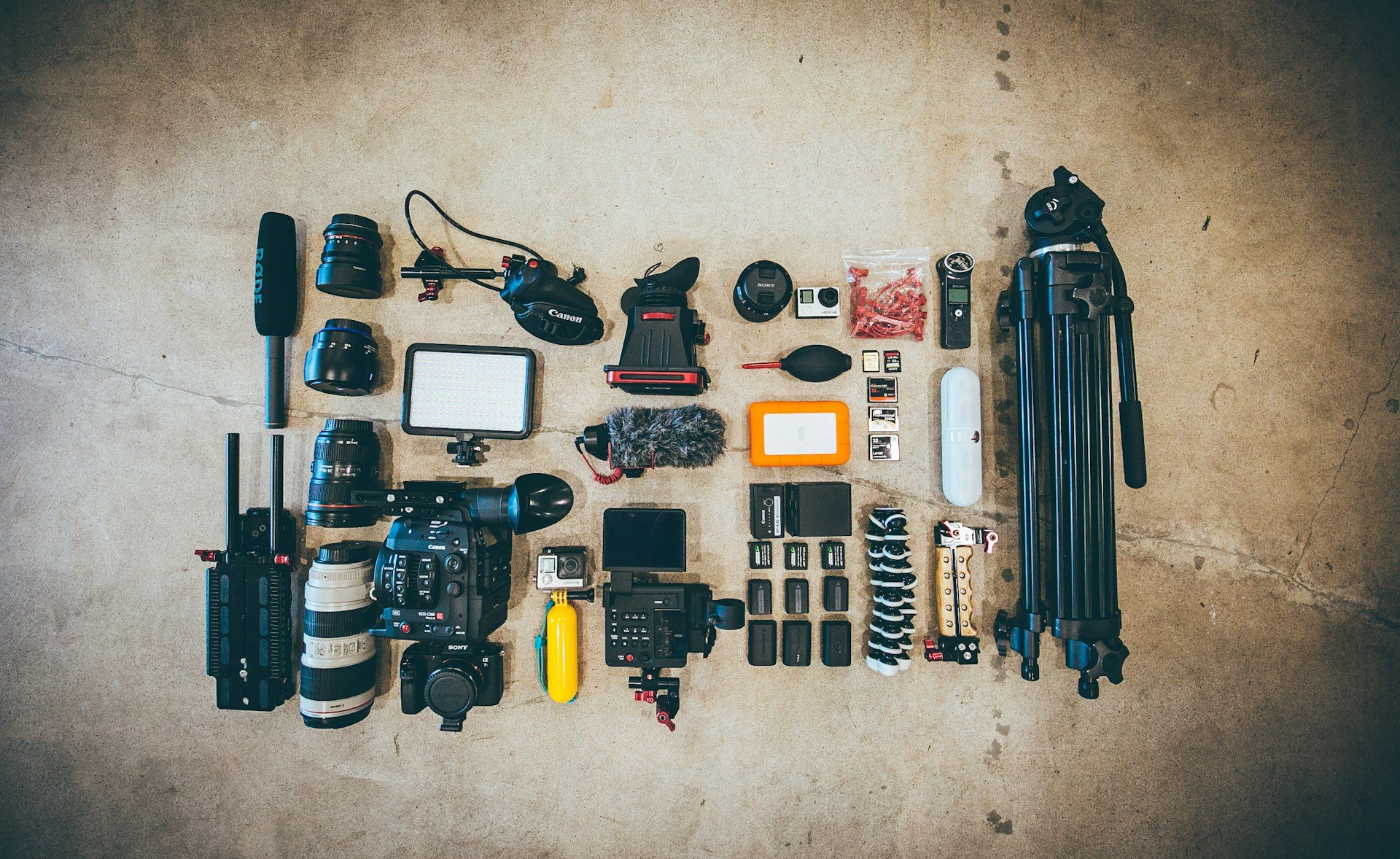
- Sony Alpha 7C II: A full-frame mirrorless camera with 4K (3840 x 2160 pixel resolution) video at 60fps. Its improved autofocus system tracks subjects smoothly, making it a strong choice for walkthrough-style property videos.
- Neewer LED Light Kit: An adjustable LED panel kit with variable brightness and color temperature. It lets you light dim rooms evenly so every space looks bright and inviting on camera.
- LaCie Rugged Mini 2TB Hard Drive: A shock-resistant portable hard drive for storing and transporting large video files. Fast transfer speeds mean you spend less time waiting and more time editing.
- Manfrotto 055 Tripod: A sturdy aluminum tripod with a center column that switches between horizontal and vertical orientations. It keeps your shots steady and your framing consistent from room to room.
- DJI RS 4 Gimbal: A 3-axis handheld stabilizer designed for mirrorless and DSLR cameras. It produces smooth, cinematic footage as you walk through a property, eliminating the shaky look that makes videos feel amateur.
- DJI Air 3 Drone: A dual-camera drone with 4K HDR video and up to 46 minutes of flight time. It captures aerial views of the property, the lot, and the surrounding neighborhood that ground-level cameras simply cannot replicate.
- Rode VideoMic Pro+: A directional condenser microphone with noise isolation. It records clear voice-over audio and reduces background noise, which matters when you are narrating a walkthrough or filming on a busy street.
- Adobe Premiere Pro: The industry-standard video editing software. It provides the tools to cut footage, add music, insert text overlays, and color-correct your clips into a polished final product.
The right gear can make a noticeable difference in your video quality. But remember: a well-planned video shot on a smartphone will always outperform a poorly planned video shot on a $3,000 camera. Strategy comes first.
Real estate videography strategy must-dos
Getting started with video does not have to be complicated. The strategy below walks you through the most important steps for planning, shooting, editing, and distributing real estate video content. Follow these in order and you will have a repeatable system you can use for every listing.
Put quality first
A high-quality video reflects directly on your professionalism. Buyers notice when footage is sharp, well-lit, and smoothly edited, and they notice just as quickly when it is not. You do not need Hollywood production values, but you do need clean audio, steady shots, and a final product that looks intentional rather than rushed.
Plan everything before you shoot
Before you pick up a camera, walk through the property and make a shot list. Write down the rooms, angles, and features you want to capture. Note the order you will move through the home so the final video flows logically from the front door through the living spaces and out to the backyard. Spending 20 minutes on a shot list will save you hours of re-shooting and editing later.
Sell location and lifestyle
Buyers are not just purchasing a house. They are choosing a neighborhood, a commute, and a daily routine. Include footage of the surrounding area in your videos: the nearby park, the walkable downtown, the view from the back porch. This gives viewers a clear picture of the life they would be living, not just the walls they would be living inside.
Stage before shooting
A well-staged property looks better on camera and helps potential buyers picture themselves in the space. Clear clutter, arrange furniture to show each room’s purpose, and add small touches like fresh flowers or neatly folded towels. According to the National Association of Realtors’ 2023 Profile of Home Staging report, staged homes sell faster and often for higher prices than unstaged ones (NAR, 2023).
Light the scene
Lighting is the single biggest factor in whether your video looks professional or amateur. Open every curtain and blind to let in natural light. Turn on all interior lights. If a room still looks dim, use a portable LED panel (like the Neewer kit mentioned above) to fill in shadows. Shoot during daylight hours whenever possible, and avoid mixing warm and cool light sources in the same room, as this creates an uneven color cast that is difficult to fix in editing.
Shot composition: wide shots and close-ups
Your video needs both wide shots and close-ups to tell the full story of a property. Wide shots establish each room’s size, layout, and relationship to the rest of the home. Close-ups highlight the details that make a property special: the grain of a marble countertop, the hardware on custom cabinetry, or the view through a picture window.
| Shot type | Purpose | Recommended equipment |
| Wide shot | Shows room size, layout, and flow between spaces | Camera on tripod or gimbal with wide-angle lens (16–24mm) |
| Close-up | Highlights finishes, fixtures, and design details | Handheld camera or gimbal at 35–85mm focal length |
| Aerial shot | Shows property footprint, lot size, and neighborhood context | Drone (DJI Air 3 or similar) |
| Tracking shot | Creates a walkthrough feel as the camera moves through rooms | Gimbal (DJI RS 4 or similar) |
A good rule of thumb: start each room with a wide shot, then cut to one or two close-ups of the most noteworthy features before moving to the next space.
Spend time editing
Editing is where your raw footage becomes a finished video. Use software like Adobe Premiere Pro to trim clips, arrange them in a logical sequence, adjust color and brightness, and add transitions. Keep transitions simple. A clean cut or a short crossfade is almost always better than a flashy effect. Aim to keep your final edit between 60 and 120 seconds for listing videos, as shorter videos hold viewer attention more consistently across social platforms.
Tell a good story
The best real estate videos do more than show rooms. They walk the viewer through a narrative: arriving at the front door, stepping into the entryway, moving through the kitchen, and ending with the backyard view. Consider adding a voice-over or on-camera narration that highlights features a camera alone might not convey, like the quiet of the street, the warmth of the afternoon light, or the history of the home.
Add background music
Background music sets the tone and keeps the viewer engaged. Choose royalty-free tracks that match the mood of the property: upbeat and modern for a downtown condo, warm and relaxed for a family home, cinematic and aspirational for a high-end estate. Keep the volume low enough that it supports the visuals without competing with any narration.
Include your contact information and a CTA (call to action)
Every video you produce should make it easy for a viewer to take the next step. Display your name, phone number, and email at the beginning and end of the video. Add a clear CTA such as “Schedule a showing” or “Visit our website for more photos” with a link to your contact page or listing page. If you are hosting the video on your website, embed a lead-capture form directly below the player.
Share your video across every channel
A video that sits on your hard drive does not generate leads. Share every listing video on your website, your social media channels, your MLS listing, and your email campaigns. Each platform extends your reach to a different audience, and the more places your video appears, the more likely it is to attract inquiries.
Post on video platforms
As of 2026, video platforms remain among the most valuable search-driven channels globally, which makes them a high-value option for real estate video distribution. Create a dedicated channel for your business, organize videos into playlists by neighborhood or property type, and write keyword-rich titles and descriptions so your content appears when buyers search for homes in your area.
Use relevant keywords for search
Include relevant keywords in your video title, description, and tags on every platform where you upload. Use the property address, neighborhood name, city, and property type (e.g., “3-bedroom ranch in Scottsdale”) so your video shows up in local search results. In 2026, geotags and location-based metadata remain among the most effective signals for local video discoverability.
Consider paid ads
As of 2026, Facebook and Google remain the highest-reach platforms for paid real estate video distribution. Repurpose your listing videos into short-form ads targeting buyers in specific zip codes, income brackets, or interest categories. Even a modest advertising budget can dramatically expand the number of qualified eyes on your listings, especially when you pair video creative with Facebook Ads or Google Ads targeting.
Seven real estate videos you can make to kickstart your content
If you have your gear and a strategy in place but are not sure what to film first, start with these seven video types. Each one serves a different purpose in your marketing, and together they give you a well-rounded content library that works for listings, social media, and your website.
Property walkthroughs
A property walkthrough is the foundation of real estate videography. Walk the viewer through the home room by room, starting at the front door and ending with the outdoor spaces. Include wide shots to show layout and close-ups to highlight standout features like countertops, built-ins, or views. Keep the pace steady and the camera movement smooth.
Neighborhood tours
Take potential buyers on a tour of the surrounding area. Film the local coffee shop, the nearest park, the school down the street, and the view from the main intersection. Neighborhood tours help buyers who are relocating from out of town understand what daily life looks like in your market, and they position you as the local authority.
Client testimonials
A short video of a satisfied client sharing their experience working with you builds trust faster than any written review. Keep it simple: ask the client two or three questions on camera, let them answer naturally, and edit the clip to 60–90 seconds. Post these on your website’s testimonials page and share them on social media.
Market updates and advice
Position yourself as a knowledgeable resource by recording short videos that cover local market trends, buying tips, or selling advice. A 60-second video explaining what buyers should know about your market this month gives people a reason to follow you and builds credibility over time.
Before-and-after renovation videos
If you work with properties that have been renovated or flipped, document the transformation. Show the “before” footage, walk through the renovation choices, and reveal the finished result. These videos are highly shareable on social media and demonstrate your eye for value and design.
Live Q&A sessions
Host a live video session on Instagram, Facebook, or another video platform where you answer questions from potential buyers and sellers in real time. Live sessions create a sense of accessibility and give viewers a chance to interact with you directly. Save the recording and repurpose it as evergreen content on your channel.
Agent or team profile videos
Introduce yourself, your team, and your approach to real estate in a short profile video. Share what drives you, what your market specialties are, and what clients can expect when they work with you. This type of video belongs on your website’s about page and is one of the first things prospective clients will watch when deciding whether to contact you.
Real estate videography for luxury agents in 2026
When you are marketing properties at the top of the market, the quality of your video content needs to match the caliber of the homes you represent. Buyers in the luxury segment expect cinematic production, thoughtful storytelling, and a viewing experience that feels as polished as the property itself.
That emotional connection is exactly what separates a good listing video from one that drives offers. For high-end properties, invest in professional equipment or a dedicated videographer who can deliver aerial drone footage, smooth gimbal walkthroughs, and color-graded editing. Virtual tours that let buyers explore the home interactively are also becoming standard for properties above $1 million.
Personalization matters in this segment. Tailor your videography to the specific buyer profile you are targeting. A waterfront estate might call for golden-hour footage of the sunset over the dock. A modern architectural home might benefit from dramatic wide-angle shots that emphasize clean lines and open space. Think about what makes each property’s story distinct, and let that story guide your shot list.
Consider crafting niche content for specific buyer types: golf enthusiasts, wine collectors, families looking for estate-sized lots, or international buyers relocating to your market. The more specific your video feels, the more it resonates with the right audience.
Common real estate videography pitfalls
Even agents who are committed to video make avoidable mistakes that undermine their results. Here are the five most common pitfalls and how to avoid each one.
- Skipping the shot list: Without a plan, you will miss features, shoot rooms out of order, and spend twice as long editing. Walk the property before you film, write down every shot you need, and number them in the sequence you want them to appear in the final video.
- Poor lighting: Dark, unevenly lit rooms make even beautiful properties look uninviting on camera. Open all blinds, turn on every light, and bring a portable LED panel for rooms that still look dim. Shoot during daylight hours whenever possible.
- Shaky footage: Handheld camera shake makes your video look rushed and unprofessional. Use a tripod for static shots and a gimbal for any moving shots. If you are using a smartphone, turn on its built-in stabilization feature before you start recording.
- Ignoring audio: Background noise, echo, and muffled narration distract viewers from the property. Use a directional microphone for voice-overs and choose a quiet time of day to record on-site audio. If the ambient sound is unavoidable, rely on background music and text overlays instead of narration.
- Skipping post-production: Raw footage rarely tells a compelling story on its own. Take the time to trim clips, adjust color and brightness, add music, and insert your branding. Even 30 minutes of editing can turn a rough cut into a video you are proud to share.
Making Real Estate Videography Work for You
Real estate videography is most effective when you combine the right gear, a clear shooting plan, strong lighting, and thoughtful editing to tell a complete story about the property and its location. Whether you handle production yourself or hire a pro, the goal is the same: create videos that attract attention, build trust, and make it easier for buyers to take the next step. Start simple, stay consistent, and let each new video sharpen your marketing over time.
FAQs
Run your social strategy by our experts
From developing a calendar to posting content, our team can grow your following, increase engagement, and establish you as a market and lifestyle expert.
About the author

Chris Linsell is a real estate professional and content strategist with more than a decade of experience in the industry. He previously served as Director of Content at Luxury Presence, where he led a team of writers and strategists focused on telling the stories behind the company’s products, services, and clients. Linsell is also a former Senior Writer and Technology Analyst at The Close, where he covered emerging real estate technologies, strategies, and best practices used by top agents and teams.