A real estate community guide is a neighborhood-focused resource that explains local amenities, housing data, schools, demographics, and lifestyle details for buyers evaluating where to live. To create one in 2026, you need to cover eight core sections: neighborhood overview, local amenities, schools, housing market data, demographics, transportation, local economy, and future development plans. Then you need to promote it through the right channels so it actually drives traffic and generates leads for your business.
If you have ever felt like your website blends in with every other agent’s site in your market, a community guide is one of the fastest ways to stand out. It gives prospective buyers an in-depth look at the neighborhoods they care about, going far beyond typical listing details. And for you, it becomes a magnet that attracts the right people to your site, positions you as the local authority, and turns visitors into warm leads you can nurture over time.
Below, you will learn exactly what to include in your guide, how it supports your marketing strategy, how to stay compliant with fair housing laws, and how to use AI tools to speed up the creation process.
Find It Fast
Key takeaways
- A real estate community guide covers eight core sections: neighborhood overview, local amenities, schools, housing market data, demographics, transportation, local economy, and future development plans.
- Well-structured guides help agents rank for hyperlocal keywords and attract organic leads from buyers actively researching specific neighborhoods.
- Fair Housing Act compliance requires objective, factual language free of demographic preferences or assumptions about who would “fit” a community.
- AI tools can accelerate the drafting process, but all output requires fact-checking and your personal review before publishing.
- Promoting your guide through paid ads, social media, email, and your website multiplies its reach and lead-generation impact.
- One agent generated 46 leads in six months, with 29 of those coming from organic search, by publishing 31 blog posts focused on local neighborhood content. (Source: Luxury Presence Case Study: Roh Habibi, 2026)
What is a real estate community guide?
A real estate community guide is a detailed overview of a specific neighborhood or area, published on your website as a dedicated page or downloadable resource. It gives buyers a clear picture of what life in a particular neighborhood looks like, covering everything from schools and parks to housing prices and commute times. The goal is to help prospective clients make informed decisions about where they want to live, while positioning you as the agent who knows the area best.
Think of it as your neighborhood resume. Instead of just listing homes for sale, you are showing buyers the full story of a community. That depth of knowledge is what separates agents who attract inbound leads from agents who are constantly chasing them.
How real estate community guides benefit agents in 2026
Creating a neighborhood guide does more than provide information. It is a strategic asset that builds your reputation, improves your search visibility, and brings qualified leads to your website. Here is how.
Establishing authority
When potential buyers want to understand the lifestyle in a specific area, a well-researched guide answers their questions before they ever pick up the phone. That positions you as the go-to resource for detailed, relevant neighborhood knowledge. It also signals to sellers that you have the local expertise to properly market their properties.
That question captures exactly why community guides work. No portal or aggregator site can match the depth of local insight that a neighborhood-focused agent brings. When you publish that insight on your own website, you own the relationship from the first click.
Improving SEO and online presence
When you build your guide around the right keywords, it can significantly boost your search engine optimization (SEO) efforts. Hyperlocal terms like “Wagener Terrace community guide” or “best neighborhoods in Charleston” are particularly effective for attracting buyers researching specific areas. Creating localized content that aligns with your target audience’s interests improves your search visibility. Buyers searching for information about specific neighborhoods are more likely to find your site instead of a competitor’s.
In 2026, local search behavior continues to favor agents who publish detailed, area-specific content. According to BrightLocal’s research, the vast majority of consumers use online search to find local businesses and services, making hyperlocal content one of the most direct ways to appear in front of buyers actively researching your market (BrightLocal, 2026).
Bringing in leads
Offering a downloadable or gated community guide on your website can attract potential clients and capture their contact information. By requiring visitors to provide their email in exchange for the guide, you build your list with warm leads who are already interested in specific neighborhoods. That makes it much easier to nurture them into clients over time.
According to NAR’s research, the overwhelming majority of buyers begin their home search online, which means the agents who show up with useful neighborhood content are the ones capturing attention before a buyer ever contacts an agent (NAR, 2026).
The numbers back this up. Roh Habibi of The Habibi Group at Golden Gate Sotheby’s International Realty published 31 blog posts focused on local real estate trends and neighborhood guides. Within six months, his site generated 46 total leads, with 29 of those coming from organic search alone. His content also earned a 55% engagement rate and ranked for 76 top-10 keywords. (Source: Luxury Presence Case Study: Roh Habibi, 2026)
Supporting content marketing efforts
Community guides offer high-quality, evergreen content that you can weave into your broader marketing strategy. Share sections of your guide through newsletters, blog posts, and social media channels to keep your leads engaged and informed. A single guide can fuel weeks of content across multiple platforms.
Develop your lead nurturing strategy
Turn leads into clients with our free scripts, follow-up schedules, and communication tips.
What to include in a real estate community guide
A well-crafted neighborhood guide should offer a detailed overview of the area, providing both general context and specific details that buyers find useful. Here is a breakdown of the eight sections to include.
Neighborhood overview
Start with a high-level introduction that gives readers a sense of the overall character of the area. This section should paint a clear picture of what life is like, helping prospective clients decide whether it matches their lifestyle preferences.
- Key topics to include: The community’s history, notable landmarks, and any characteristics that make it distinct from surrounding neighborhoods.
- Example: “Nestled in the heart of the city, Hampton Park Terrace is known for its tree-lined streets, historic architecture, and vibrant local culture. With a mix of modern amenities and a rich history, this neighborhood attracts young professionals and families alike.”
Local amenities and attractions
Potential buyers want to know what daily life will look like in a new neighborhood. Cover the places residents visit most often, and highlight popular attractions like entertainment venues, dining spots, and cultural hubs.
- Key topics to include: Shopping centers, restaurants, parks, fitness facilities, public transit options, and entertainment venues. Note how these amenities benefit local residents and contribute to the community’s identity.
- Example: “Residents of Hampton Park Terrace enjoy easy access to Hampton Park, known for its jogging trails and community events, as well as top-rated dining options like Park and Grove, offering gourmet cuisine in a relaxed atmosphere.”
Schools and education
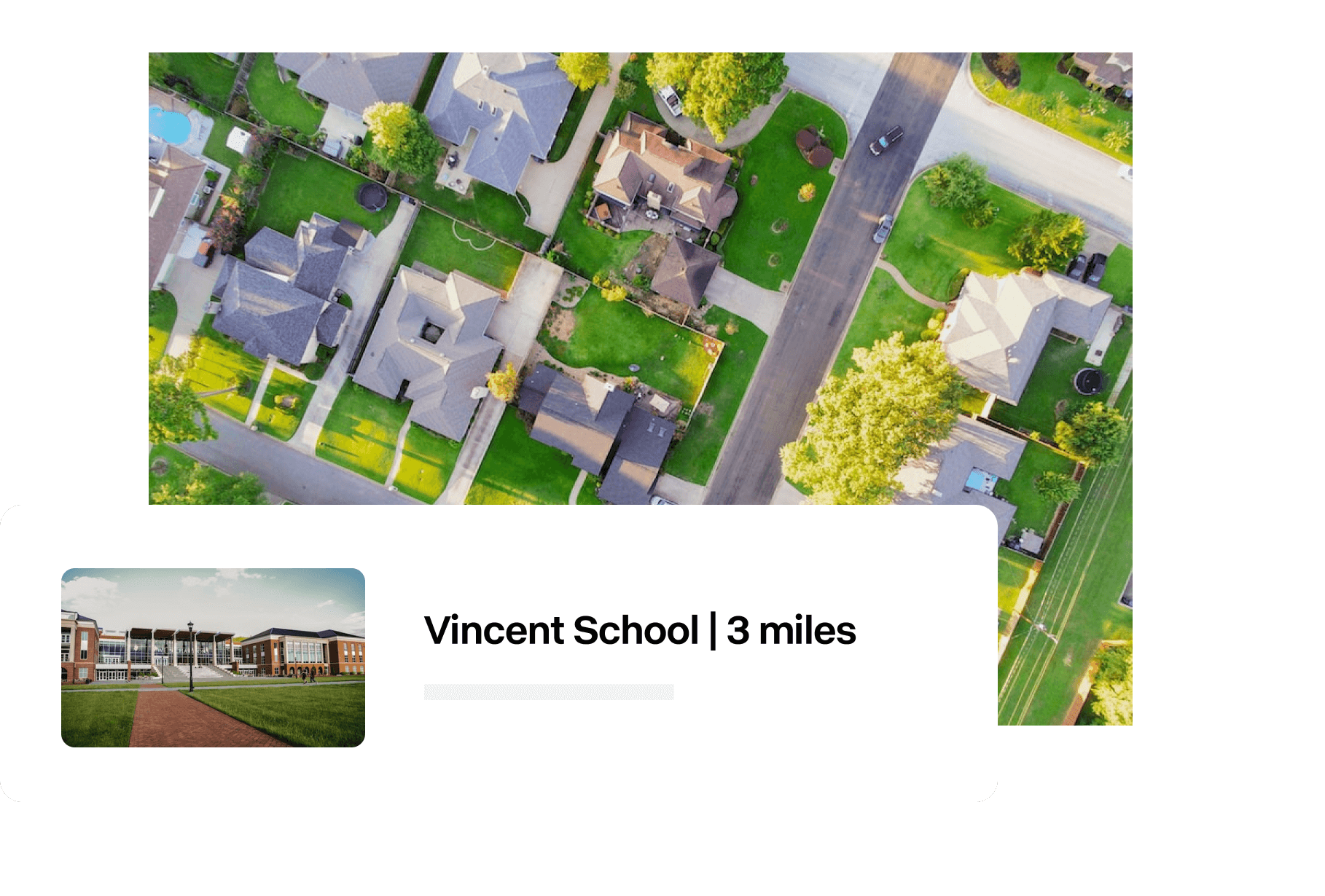
For families, school districts are often a deciding factor when choosing a neighborhood. Keep your information objective and rely on third-party sources for ratings and rankings.
- Key topics to include: Information on the top schools in the area, along with their ratings, types (public, private, charter), and any special programs they offer. Mention proximity to colleges or adult education options if relevant.
- Example: “Hampton Park Terrace is home to several well-regarded schools, including James Simons Elementary, which consistently ranks among the best for its academic performance, Montessori programming, and extracurricular programs.”
Housing market overview
A housing market snapshot is a vital part of any neighborhood guide. Keep your market information fairly general and based on annual statistics so you are not updating this section every week or month. Link to your market report page for more detailed, frequently updated data.
- Key topics to include: Types of properties common in the area (single-family homes, condos, townhouses), along with relevant statistics like median home prices, time on market, and inventory levels.
Demographics and lifestyle
Buyers often want to know more about the people who live in a neighborhood. Provide a snapshot of the demographic makeup, including age, income levels, and family types. You can also include insights into the neighborhood’s lifestyle, such as whether it attracts families, young professionals, retirees, or a mix.
- Key topics to include: Demographic breakdown, community activities, and cultural character. Highlight local traditions or notable neighborhood events.
- Example: “With a median age of 35 and a mix of young professionals and families, Hampton Park Terrace has a community-oriented character. The neighborhood hosts annual events like the Teddy Bear Picnic and the Spoleto finale, bringing residents together for food, music, and entertainment.”
Transportation and commute times
Buyers want to know how easy it will be to get to work or access public transportation. Consider including Walk Scores or even embedding an interactive map that helps readers with geographical context.
- Key topics to include: Nearby highways, public transit options, and average commute times to popular employment centers. Include information on walkability and bike-friendliness, especially if these factors matter in your target market.
- Example: “Commuters in Hampton Park Terrace enjoy quick access to major highways, including highways 17 and 26. The neighborhood also offers multiple bus lines and bike-friendly routes.”
Local economy and job opportunities
For buyers who may be relocating, understanding the local economy and job market matters. Include information about industries and employers, and also mention coworking spaces for remote workers.
- Key topics to include: Major employers, local industries, and any business growth in the area. If applicable, mention nearby tech hubs, industrial centers, or corporate headquarters that could appeal to professionals.
Future development plans
Including information about upcoming developments can help prospective buyers understand how the area might change in the coming years.
- Key topics to include: New shopping centers, public transportation projects, or residential developments. Discuss how these changes might affect property values, lifestyle, and accessibility.
- Example: “Future development plans for Hampton Park Terrace include improvements to the Citadel football stadium, which will function as a multiuse venue and is expected to boost property values.”
Staying compliant with the Fair Housing Act (FHA)
Note: The guidance in this section is informational only and does not constitute legal advice. Consult a licensed real estate attorney or your brokerage’s compliance officer for guidance specific to your market.
When writing a community guide, real estate agents must be mindful of Fair Housing Act (FHA) guidelines to avoid unintentionally discriminatory language. Phrases that could suggest preferences or exclusions based on race, religion, familial status, or national origin can violate fair housing laws.
Describing neighborhoods in ways that imply certain groups of people are more or less desirable, or making assumptions about the type of buyers who would “fit” a community, can lead to legal issues. Focus on objectively delivering factual information, like amenities, schools, and property features, to ensure compliance. When in doubt, have your brokerage’s compliance team review your guide before publishing.
Using AI technology to create your community guide in 2026
Creating neighborhood guides can be time-consuming, especially when you are juggling showings, negotiations, and client follow-ups. That is where artificial intelligence (AI) tools like ChatGPT and similar large language models come into play. AI simplifies the research and writing process, helping you generate a strong first draft faster and with less manual effort. With AI, you can create informative, engaging guides that provide real value to your audience without spending hours researching, drafting, and editing from scratch.
These prompts are written for current-generation AI tools available in 2026, including GPT-5 and similar large language models. Review all outputs carefully, as AI-generated content may contain inaccuracies.
The Ultimate
AI Prompt Guide
The shortcut to AI mastery starts here.
5 templated prompts for using AI to help generate community guides
These prompts give you a solid starting point to customize your guides to specific neighborhoods. Always fact-check and edit the output before publishing.
- Basic neighborhood overview
- Prompt: “Write a 500-word overview of [neighborhood name], focusing on the amenities, local attractions, and housing market trends.”
- Schools and education
- Prompt: “List and describe the top three schools in [neighborhood name], including their ratings, locations, and what makes each one distinct.”
- Lifestyle and demographics
- Prompt: “Provide a snapshot of the lifestyle in [neighborhood name], including the types of residents, common activities, and community culture.”
- Real estate market insights
- Prompt: “Summarize the real estate market in [neighborhood name] as of 2026, including median home prices, types of properties available, and market trends over the last year.”
- Market data analysis
- Prompt: “Here is the latest housing market data for [neighborhood name]: [insert market data]. Please analyze the trends based on this data, including any changes in median home prices, days on market, and inventory levels. Highlight any notable shifts and provide insights into whether it is a buyer’s or seller’s market.”
If you want to go further, Luxury Presence’s Social Media Management can handle the content creation process for you, delivering professional-grade marketing content at speed. Nothing publishes without your approval, so you stay in control of your brand voice while saving hours each week.

Making your community guide visually compelling and on brand
Your guide needs to be informative and visually appealing to capture and hold the attention of potential clients. Here is how to make it look as good as it reads.
Align it with your branding
Consistency in branding is what maintains a professional image and reinforces your business identity. Make sure the design of your guide matches what is in your brand book, including colors, fonts, and logo placement. This consistency builds brand recognition and trust with your audience.
Incorporate high-quality images
Visual content plays a significant role in making your guide more engaging and giving readers a real sense of what life in the area is like. Include high-resolution images of the neighborhood, local attractions, and community features. Make sure these images are relevant and add context to the written content.
Use infographics and data visualization
Infographics and data visualizations are effective for presenting complex information in a format that is easy to scan. Use charts, graphs, and maps to illustrate market trends, demographic data, and other relevant statistics. This helps readers quickly grasp the most important numbers without reading dense paragraphs.
Prioritize readability and accessibility
The design of your guide should prioritize readability and accessibility. Use clear, legible fonts and make sure the text contrasts well with the background. Break content into digestible sections with headings and bullet points. Also, make sure the guide is accessible to all users, including those with disabilities, by following web accessibility best practices.
Maintain consistent quality across formats
As you design your guide, make sure it works well in both print and digital formats. For printed versions, use high-quality paper and printing techniques. For digital versions on your website, keep file sizes reasonable to ensure fast loading times without sacrificing visual quality.
Promoting your real estate community guide
Creating a high-quality guide is only half the equation. Getting it in front of the right people is what turns it into a lead-generation asset. Here are six ways to promote your guide and multiply its reach.
Pay-per-click (PPC) advertising
Use PPC advertising to drive targeted traffic to your guide. Create ad copy that highlights the value of your resource, such as “Discover the best of [neighborhood] with our in-depth community guide.”
Target keywords related to the neighborhood and real estate inquiries to make sure your ads reach people actively searching for information about the area. Direct the ads to a dedicated landing page where visitors can download or access the guide in exchange for their contact information.
Social media marketing
Social media is one of the most effective channels for promoting your guide. Share engaging posts across platforms like Facebook, Instagram, and LinkedIn to capture the attention of your audience.
Use eye-catching images, infographics, and snippets from the guide to highlight key insights. Create a compelling call to action encouraging users to download or request the guide. You can also use paid social media ads to target specific demographics and interests, making sure your guide reaches potential clients who are most likely to be interested in the neighborhood.
Email marketing
Create a dedicated section in your newsletters or a standalone email campaign to promote your guide. Highlight the value it offers and include a clear call to action with a link to access the resource.
Segment your email list to target leads who have shown interest in specific neighborhoods or have previously engaged with similar content. This targeted approach makes sure the guide reaches those most likely to convert.
Website and blog integration
Add the guide to your website and blog to increase visibility. Create a dedicated page or blog post that showcases the guide and provides a link to download it.
Build the page around relevant keywords to improve SEO and attract organic traffic. Make sure the page is visually appealing and includes a simple form for visitors to access the guide. You can also add a banner on your homepage that promotes the guide to every visitor.
That is the real advantage of hosting your guide on your own website rather than publishing it on a third-party platform. Every visitor who lands on your guide page is on your turf, seeing your brand, and one form fill away from becoming a lead in your database.
Collaborations and partnerships
Partner with local businesses, influencers, or community organizations to expand your reach. Offer to feature their insights or promotions within your guide in exchange for them promoting it to their audience.
Local real estate bloggers or neighborhood influencers can also help amplify your guide’s reach and credibility. These partnerships let you tap into new networks and drive more targeted traffic to your site.
Local events and open houses
Promote your guide at local events and open houses. Distribute printed versions of the guide or offer QR codes that link to the digital version. Use these opportunities to engage directly with potential clients and provide them with useful information about the neighborhood. Incorporate the guide into your event materials and presentations to extend its visibility beyond your website.
Quick reference: building and promoting your community guide
| What to include | How to promote it |
| Neighborhood overview | PPC advertising targeting neighborhood keywords |
| Local amenities and attractions | Social media posts with images and snippets |
| Schools and education | Email campaigns to segmented lists |
| Housing market overview | Dedicated website page with lead capture form |
| Demographics and lifestyle | Collaborations with local businesses and influencers |
| Transportation and commute times | Printed copies at open houses and local events |
| Local economy and job opportunities | Blog posts linking to the full guide |
| Future development plans | QR codes on marketing materials |
Getting started with your community guide
You now have the full framework: eight sections to include, fair housing guidelines to follow, AI prompts to speed up the writing, design principles to make it look professional, and six promotion channels to get it in front of the right people. The next step is to pick one neighborhood, draft your first guide, and publish it on your website.
If you want to move faster, Luxury Presence, a real estate marketing and website platform trusted by 30% of the WSJ RealTrends Top 100 agents, provides the infrastructure to build, host, and promote your community guides at scale. From done-for-you digital marketing to website design built for lead capture, the platform gives you everything you need to turn your local expertise into a consistent flow of inbound leads.
FAQs
AI SEO Specialist
Boost your visibility and drive more organic leads with AI-powered, always-on SEO optimization.
About the author

Kate Evans is a content marketing strategist at Luxury Presence, the leading growth platform for high-performing real estate professionals. She develops data-driven editorial content and supports SEO strategy and brand voice frameworks that help agents attract qualified leads and establish market authority. Her published work covers topics including CRM strategy, social media marketing, and digital growth, supporting thousands of agents in scaling their businesses through modern marketing.